We are open to partnering, contact our team at
A scalable, natural, Generally Recognised as Safe encapsulation technology for the oral delivery of active pharmaceutical ingredients (APIs) to specific areas of the gut allowing a controlled release of the bioactive to enhance uptake & bioavailability for the treatment of obesity, diabetes, and other metabolic diseases.
Metabolic Diseases – A Rapidly Growing Market
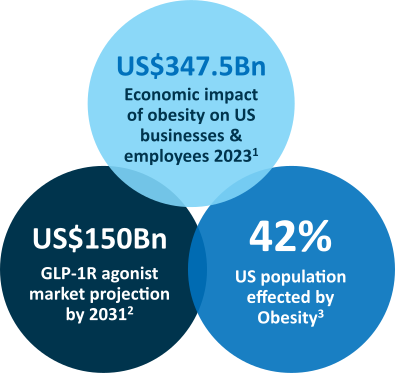
- The World Health Organisation has categorised obesity as a global healthcare issue of epidemic proportions with the US Centres for Disease Control and Prevention estimating that c.42% of the US population suffers from obesity.
- Obesity impacts nearly every system in the body causing cardiovascular diseases, type 2 diabetes, asthma, osteoarthritis, liver disease, reproductive issues, and is linked to increased risk of several types of cancer.4
- Obesity is estimated to have caused US$347.5B in economic costs to US businesses and employees in 2023. The high prevalence of obesity has catalysed the growth of prescription weight loss drugs, in particular, a class of drugs known as glucagon-like peptide 1 receptor agonists (GLP-1R).
Our Oral GLP-1 Programme
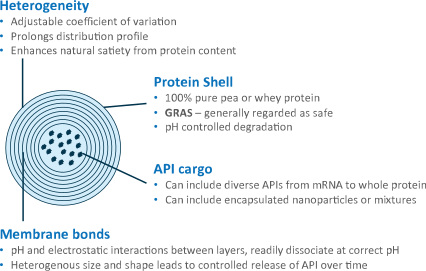
- Proprietary delivery technology microencapsulates peptides for oral delivery to a specific area of the gut, using pH sensitive release mechanism to deliver the drug to its intended site of action
- Potential to overcome oral delivery challenges of peptide-based biologicals
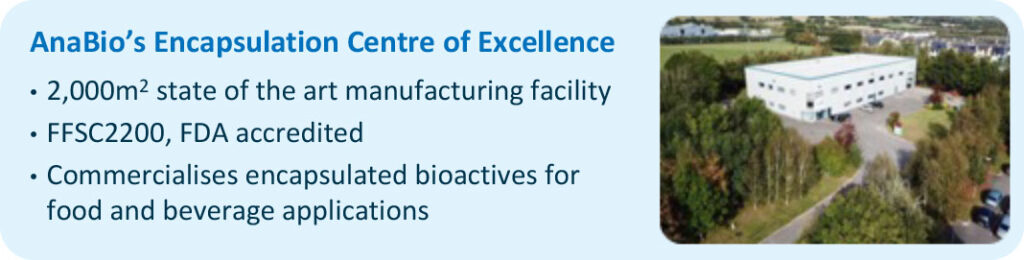
- Effectiveness of the technology has already been validated via the commercialisation of encapsulated oral probiotics and nutraceuticals by AnaBio Technologies, our collaborative partner
Proof of Concept Trial
Progressing towards proof of concept trial to determine that a GLP-1R agonist can be successfully delivered orally in humans expected to commence H2 2026, with the potential for partnering on positive data.

“This trial is designed to generate impactful data that demonstrates our ability to safely and efficiently deliver an oral GLP-1R agonist using a validated technology.”
Prof Carel le Roux
| Trial Investigator: Prof Carel le Roux | Objective: Demonstrate GLP-1 uptake |
| Site: University of Ulster | Endpoints: Safety, tolerability & PK |
| N = Up to 20 | Population: Obese subjects |
| Design: An adaptive proof of concept study of safety, tolerability and pharmacokinetics of administration of an oral encapsulated GLP-1R agonist in people with obesity |
References
1. Stierman B, Afful J, Carroll MD, et al. National Health and Nutrition Examination Survey 2017–March 2020 prepandemic data files development of files and prevalence estimates for selected health outcomes. Natl Health Stat Report. 2021;158. 2. The Economist, 2023. 3. Global Data, Assessing the Economic Impact of Obesity and Overweight on Employers, Feb 2024. 4. Fruh SM. Obesity: Risk factors, complications, and strategies for sustainable long-term weight management. J Am Assoc Nurse Pract. 2017 Oct;29(S1):S3-S14. doi: 10.1002/2327-6924.12510. 5. EMA Product information 2020. 6. Myers JT, Dam JV, Imran M, Hashim M, Dhalla AK. Preference for a Novel Oral Alternative to Parenterally Administered Medications. Patient Prefer Adherence. 2024 J. 7. PMID: 26921819 8. PMID: 35101924.9. PMID: 29033597.